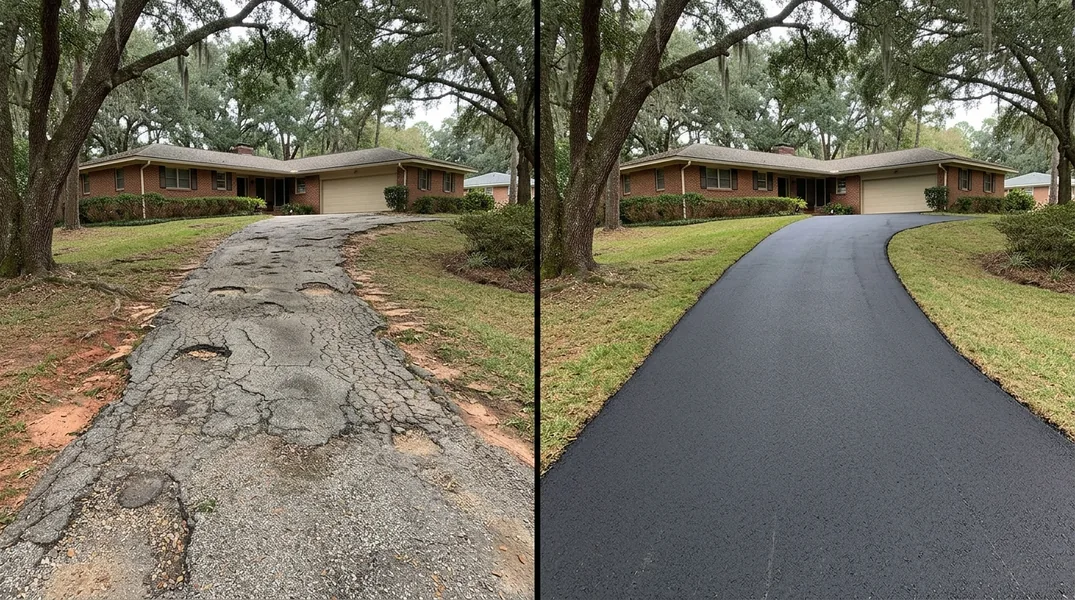
Signs Your Driveway Can Still Be Saved with Patching
Not every crack or pothole means your driveway is ready for the landfill. Many Tallahassee homeowners assume that visible damage automatically calls for a complete replacement, but that's often not the case. If your driveway is still structurally sound underneath, targeted Pothole Repair & Asphalt Patching can extend its life significantly and save you thousands of dollars.
The key is catching damage early. Small cracks that are less than a quarter inch wide and isolated potholes are prime candidates for repair rather than full replacement. When water seeps into these small openings, it weakens the base layer beneath your asphalt, which is why prompt patching matters so much. If the damage is limited to the top 2 to 3 inches of asphalt and the foundation below remains intact, patching is almost always the smarter choice. A professional assessment can determine whether your driveway still has years of usable life ahead.
When Full Replacement Becomes the Better Investment
There comes a point where patching becomes a temporary band-aid rather than a real solution. If your driveway shows widespread cracking, alligator patterns (a web of interconnected cracks), or multiple potholes across different areas, full replacement may be more cost-effective in the long run. A driveway that's deteriorating this badly typically indicates that the base foundation has been compromised, and patching individual spots won't address the underlying problem.
Asphalt Resurfacing & Overlay is sometimes a middle ground between simple patching and complete replacement. If your driveway is between 15 and 20 years old and showing moderate wear across larger sections, resurfacing can give you another 10 to 15 years of life without the expense of tearing out and rebuilding from scratch. However, if your driveway is nearing the end of its typical 20 to 30 year lifespan and shows signs of base failure, a full Asphalt Driveway Paving & Installation project is usually the wisest long-term decision.
How Long for Asphalt to Cure: What You Need to Know
Understanding curing time is essential for protecting your investment, whether you've just had patching work done or a brand-new driveway installed. Many homeowners don't realize that freshly laid asphalt isn't immediately ready for regular use. How long for asphalt to cure depends on several factors, including temperature, humidity, and the thickness of the asphalt layer. In Tallahassee's warm climate, asphalt typically reaches an initial set within 48 to 72 hours, but full curing can take up to 30 days.
During the first week after installation, your driveway is still vulnerable. The surface may feel firm, but the material hasn't reached its maximum strength. Avoid parking heavy vehicles on newly paved sections, and keep foot traffic minimal during this critical period. The longer you allow the asphalt to cure undisturbed, the better it will perform over its lifespan. Temperature plays a major role in this process. Cooler weather slows curing, while the heat of a Florida summer can speed it up, but extreme heat can also cause the asphalt to soften temporarily. Your contractor should provide specific guidance based on the conditions when your work was completed.
How Long Before You Can Drive on New Asphalt: A Timeline
How long before you can drive on new asphalt is one of the most common questions homeowners ask. The short answer is that you can typically drive on it after 48 to 72 hours, but that's just the beginning of the curing process, not the end. During those first few days, the asphalt has cooled and hardened enough to support vehicle weight without leaving tire marks, but it's still gaining strength. Light traffic after 48 hours is generally safe, but you should avoid parking in the same spot for extended periods or subjecting the surface to heavy loads like loaded moving trucks.
Full curing, where the asphalt reaches maximum density and strength, takes about 30 days. During this month-long period, continue to minimize heavy traffic and avoid parking in the same location repeatedly. If you notice any soft spots or areas where the asphalt seems to give under pressure, don't panic. This is normal during the curing phase and typically resolves as the material continues to harden. If soft spots persist beyond 30 days, contact your contractor to investigate. Proper curing is why Driveway Repair professionals always recommend patience after installation or repair work.
New Asphalt Driveway Care: Protecting Your Investment from Day One
New asphalt driveway care begins the moment the work is finished. The first 30 days are critical, but your long-term maintenance habits will determine whether your driveway lasts 15 years or 30. Start by keeping the surface clean and free of debris. Small stones and dirt can trap moisture and promote deterioration. Sweep regularly and rinse the surface with a garden hose during dry weather. Avoid using harsh chemicals or pressure washers during the first year, as these can damage the still-curing asphalt.
One of the most important aspects of new asphalt driveway care is preventing water from pooling on the surface. Standing water accelerates deterioration and creates entry points for cracks to form. Ensure your driveway has proper slope for drainage, and address any low spots where water collects. Keep gutters and downspouts clear so that water from your roof doesn't concentrate in one area of the driveway. Finally, avoid using salt or harsh de-icing chemicals during winter months, as these can break down the asphalt binder. Instead, use sand or kitty litter for traction.
How Often to Seal Driveway: A Maintenance Schedule That Works
How often to seal driveway is a question that separates homeowners who get 20 years from their driveways from those who get only 15. Seal coating is one of the most cost-effective maintenance investments you can make. A quality seal coat protects the asphalt binder from UV rays, moisture, and oxidation, all of which cause premature aging and cracking. For most driveways in Tallahassee's climate, you should apply a seal coat every two to three years. If your driveway experiences heavy traffic or is exposed to intense sun, consider sealing every two years.
Wait until your new asphalt has cured for at least 30 days before applying the first seal coat. After that initial application, maintain a regular schedule. Seal coating is relatively inexpensive compared to the cost of extensive repairs or full replacement, typically ranging from a few hundred to a couple thousand dollars depending on driveway size. By committing to this simple maintenance routine, you can extend your driveway's lifespan by five to ten years and keep it looking newer longer. If you're unsure about the right timing for your specific driveway, the team at Tallahassee Asphalt Paving can assess your surface and recommend a customized maintenance plan.
Making the Patch vs. Replace Decision: Get a Professional Assessment
The decision between patching and replacing your driveway ultimately depends on factors that a trained professional can evaluate more accurately than any homeowner can alone. Age, extent of damage, base condition, climate exposure, and your budget all play a role. A contractor with years of experience in Tallahassee knows how our local weather patterns affect asphalt and can predict how long a repair will realistically last versus how much longer a full replacement would serve you.
Don't let uncertainty keep you from taking action. The longer you wait to address driveway damage, the more expensive your eventual repair or replacement will be. Reach out to Tallahassee Asphalt Paving at (850) 755-9906 or request a free estimate to discuss your specific situation. Our team will walk you through the pros and cons of each option and help you make the decision that makes the most sense for your home and your wallet. With proper maintenance and timely intervention, your driveway can serve you well for decades to come.
Looking for a professional asphalt paving contractor in Tallahassee? Tallahassee Asphalt Paving responds fast for all your asphalt paving needs.
Get a Free Quote